
eVTOL & heavy UAV
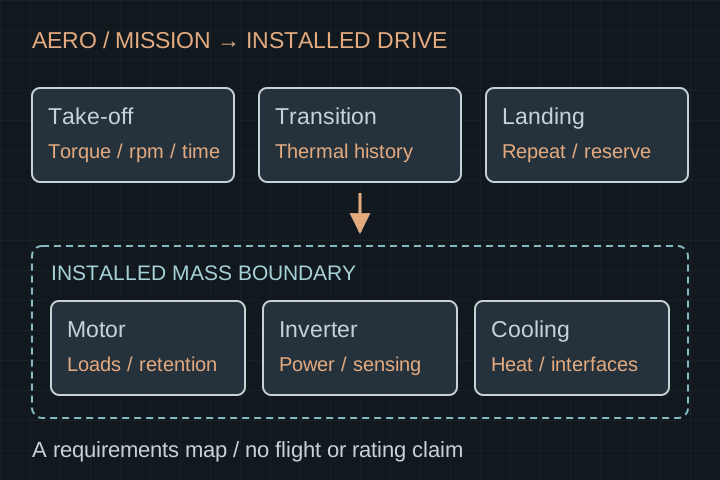
Bring the mission profile before the power-density target. Review a rotor, stator or motor development scope against installed mass, cooling and propulsion interfaces.
Review evtol & heavy uav requirementsAPPLICATIONS / DEVELOPMENT PROCUREMENT
Choose the engineering path closest to your program. Each brings together the inputs, interfaces and sample evidence needed to scope components, a frameless assembly or a custom motor project.
Choose your applicationBring the mission profile before the power-density target. Review a rotor, stator or motor development scope against installed mass, cooling and propulsion interfaces.
Review evtol & heavy uav requirements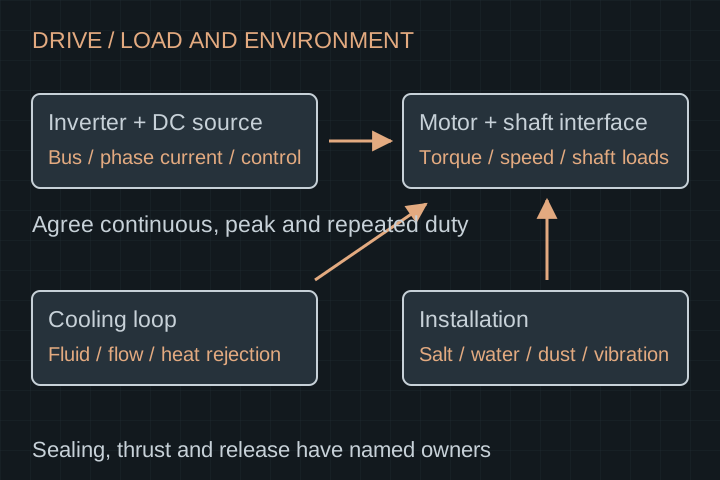
Fit the motor to the load cycle and the installation. Scope a compact drive around torque, speed, cooling, shaft loads and the environment it will actually operate in.
Review ev, marine & off-highway requirements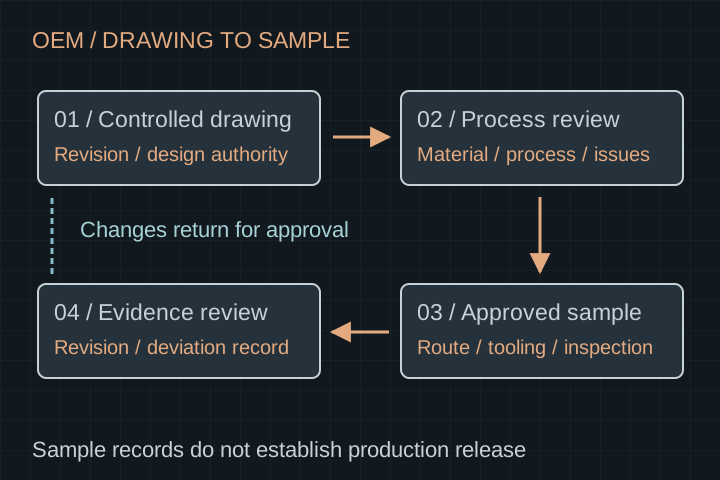
Keep electromagnetic design authority in your team. Define a manufacturable stator, rotor, housing or PCB scope with controlled revisions and an agreed sample evidence package.
Review motor oems & research labs requirementsApplication pages define a review framework, not approved product specifications. Use a motor program for electrical and thermal inputs, a component scope for drawing-led work, and the inspection page to agree sample records.