Axial flux motor components. Keep control of your design.
Bring the part of your motor program that needs a manufacturing review: magnetic teeth, wound segments, magnet rotors, precision housings or patterned PCB stators. Each scope starts with its own interfaces and acceptance requirements.
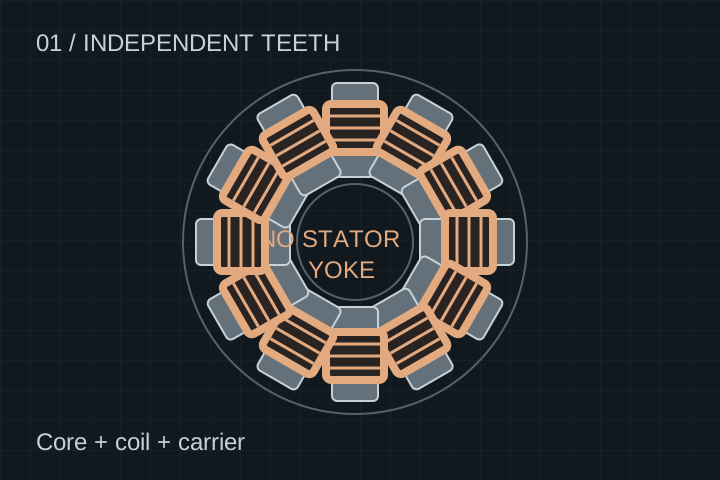
Request segmented stator manufacturing review from individual teeth to a wound and encapsulated assembly. Define the magnetic path, insulation and thermal interface before committing to tooling.
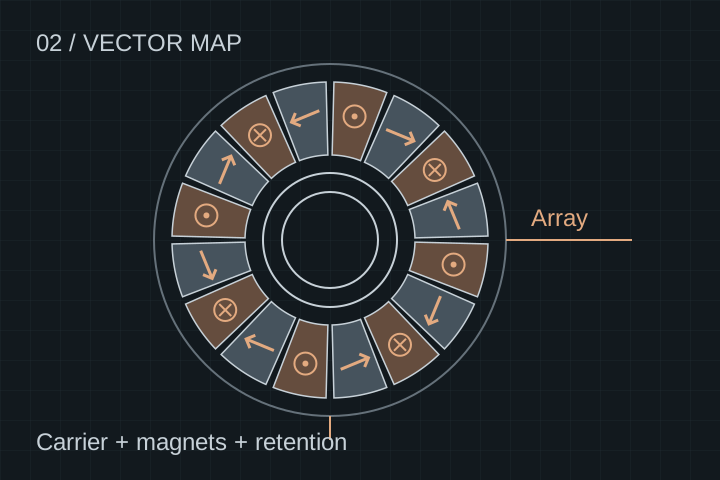
A Halbach rotor assembly inquiry needs a vector magnetization map, a mechanical retention concept and operating conditions. Review the magnet array, carrier and inspection package as one controlled assembly.
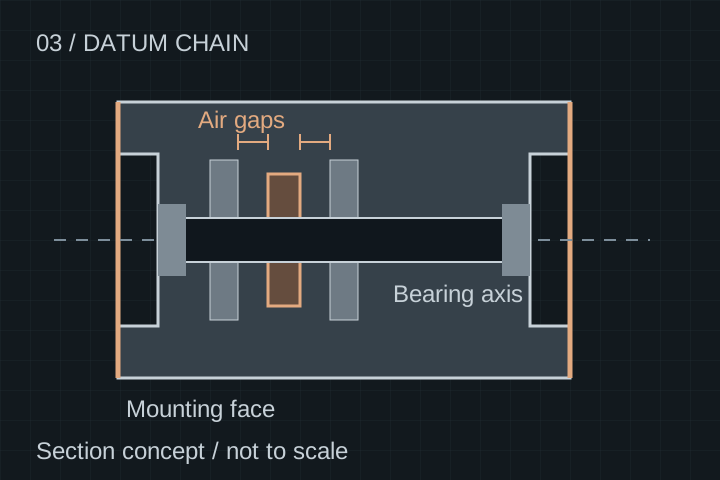
An axial flux motor housing connects bearing alignment, rotor position, stator location and cooling. Request a machining review that follows these interfaces through assembly and final inspection.
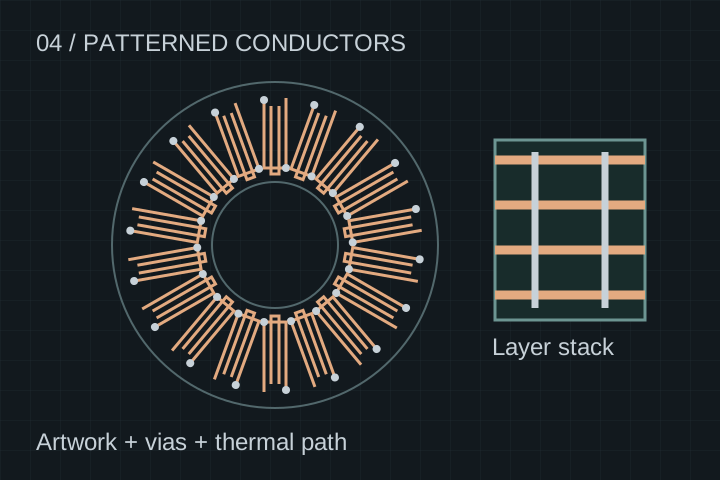
An axial flux PCB stator replaces wound coils with patterned conductors. Bring the winding artwork, layer connections and cooling boundary together before treating a board outline as a motor-ready stator.
Choose the deliverable before comparing quotations.
Parts only
Define the controlled drawing, material and inspection records. You retain the assembly and validation work.
Wound / assembled component
Add insulation, winding or magnet assembly details, interfaces and the acceptance test plan.
Integrated motor review
Bring the operating envelope, mechanical interfaces, cooling and controls. Motor-level validation is a separate scope.
Start with non-confidential inputs and request an NDA if required. Drawings, material approvals, sample cost, tooling and lead time are agreed after review. No stocked model, certified rating or blanket tolerance is implied by a component category.